Below we present you a video of our satisfied customers who are already using SAICON Portable Upvc Window Machines and are running their factories successfully.
SAICON Portable Upvc Window and Door manufacturing machines are used in India as well as exported to many countries globally.
SAICON is the largest sellers of Upvc Window Machines in India and our products have been acknowledged by many awards on national as well as global scale.
Customer Feedback of SAICON Portable Upvc Window Machines
What is Aluminium Track and why is it used in Upvc Sliding Windows & Doors?
This is a very common question that I receive from aspiring Upvc Window fabricators.
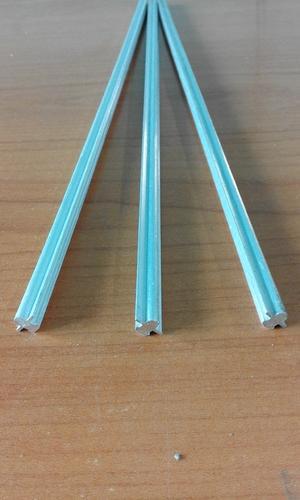
Aluminium Track is the small metal guide rail that you often see on the bottom rails or bottom of the Upvc frame profile of Upvc Sliding Windows and doors. It is made out of aluminium and hence the name aluminium track. Aluminium track is also known as aluminium guide rail in the market.
Upvc Aluminium Track is used on the bottom of the Sliding Window or door frame profileUpvc Aluminium track used in Upvc Sliding Windows and doors.
Now that you know what is a Aluminium Track and where it is used.
Its time to know when it is used during the fabrication of a Upvc Sliding Window or Door. In simpler terms, when is the right time to use a Aluminium Track in the making of a Upvc Sliding Window or Door and when can we skip the use of it.
First let us discuss about Upvc Sliding Windows.
If you are making a Upvc Sliding Window which is relatively small in size (window size less than 5′ x 4′) and you are also using glass of less than 6 mm in thickness. Then you can avoid the use of Aluminium Track in your Upvc Sliding Windows.
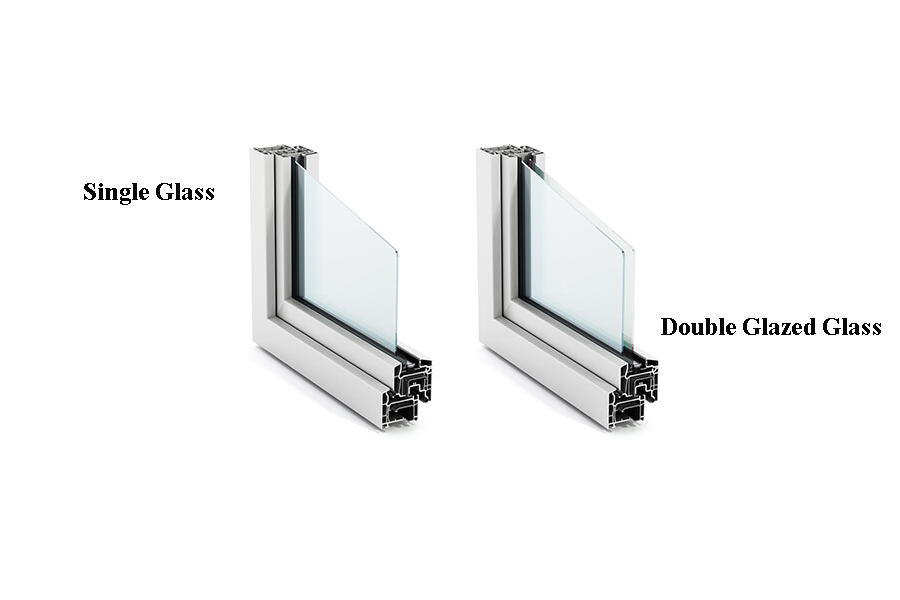
But if you are making a Upvc Sliding Window which has a glass thickness of more than 6 mm or if you are using Double Glazed Glass (D.G.U.), then it becomes mandatory to use a aluminium track in the bottom profile of your frame.
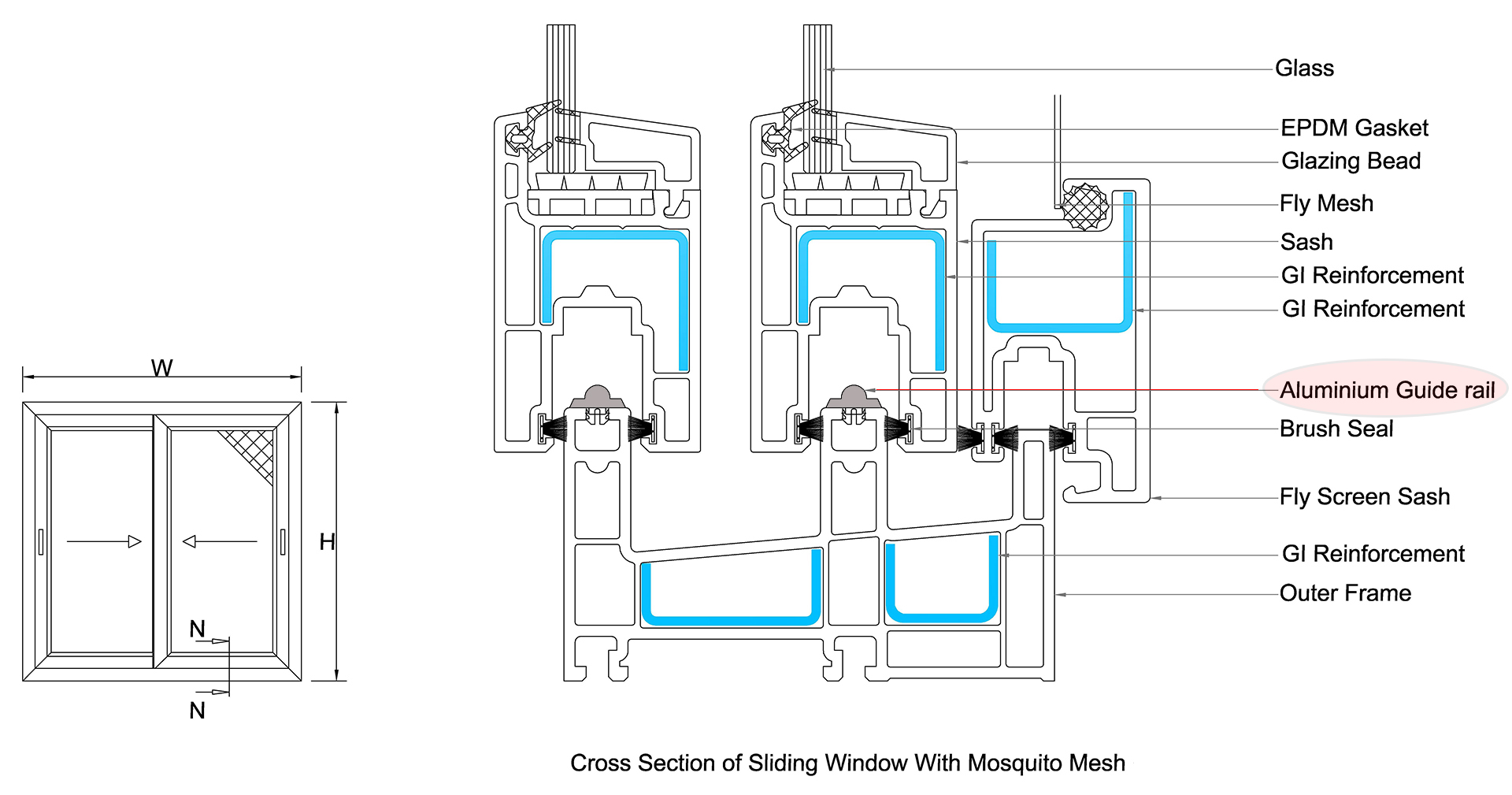
Aluminium Track used in Upvc Sliding Window with mesh
Now let us discuss about Upvc Sliding Door
Now read this carefully. Whenever you are making a Upvc Sliding Door irrespective of the thickness of the glass, it is mandatory to use a Aluminium Track in the bottom of the frame profile.
Skipping this would eventually lead to the damage of the bottom of the frame profile and you will be forced to replace the whole frame of the Upvc Sliding Door that you have made.
So please do not cut corners and skip the part of using a Aluminium Track during the fabrication of a Sliding Upvc Door.
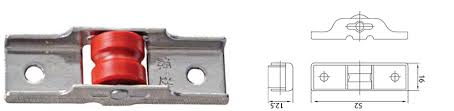
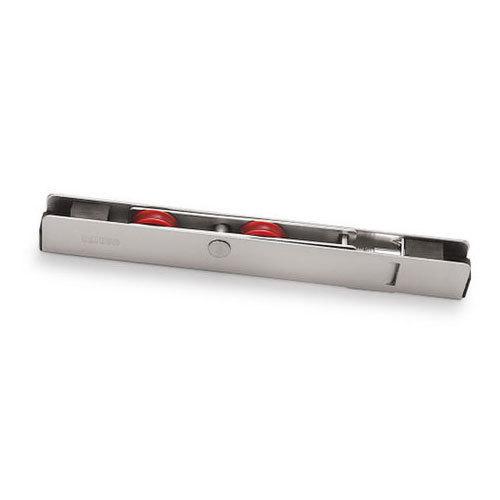
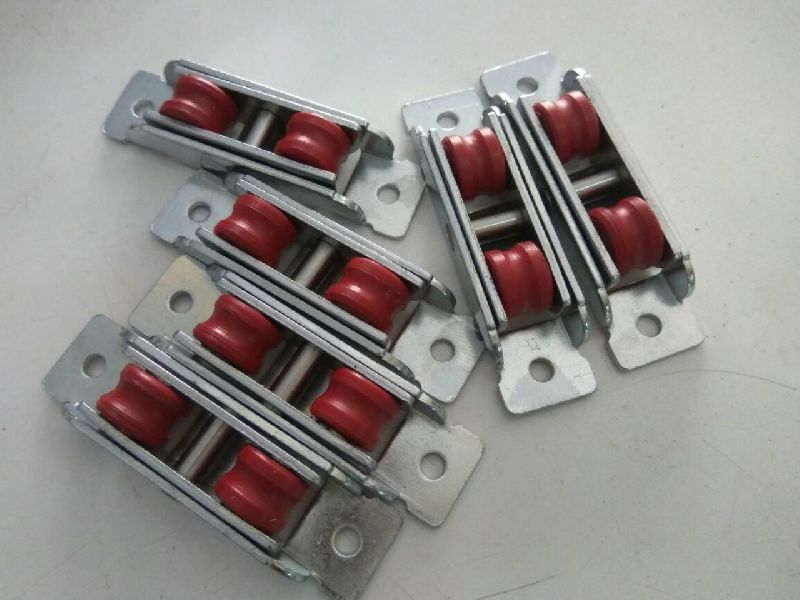
One last thing, whenever you are using Aluminium Track or Aluminium Guide Rail in your Upvc Sliding Windows or Doors, always remember to use grooved rollers for the purpose. As flat type rollers will not be able to glide during the sliding of the window and door sash.
Check how a grooved roller looks like below:
Upvc Grooved Nylon Rollers for Sliding Windows Upvc Double Adjustable Nylon Sliding Door Roller
I hope you liked the above post. Do remember to hit the like button below to keep receiving such informative posts on Upvc Window & Door making in your mailbox.
Casement Upvc Windows & Doors also known as Openable Upvc Windows and doors. These type of windows and doors cost a little more than Sliding Upvc Windows and doors. This might be the reason Casement Upvc Windows and doors sell less than Upvc Sliding Windows and doors.
Upvc Casement Window Installed at factory building
The only important reason for customers to go for Casement or Openable Upvc Windows and doors is that they get almost 100% open area compared to Sliding Upvc Windows or Doors, where the maximum possible opening possible is 66%.
The front elevation and cross section of both Casement windows and doors are shown in the drawings below.
The only difference between a Casement Window Sash and a casement door sash is the width of the profile. A Casement window sash profile is less in width than a casement door sash profile, while the frame for both types of windows remain constant.
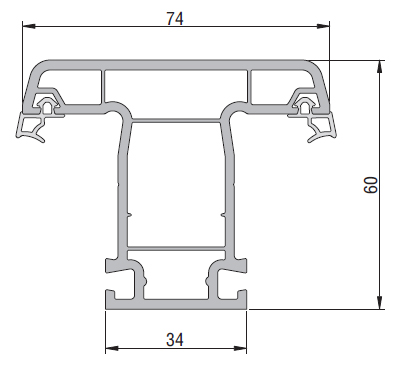
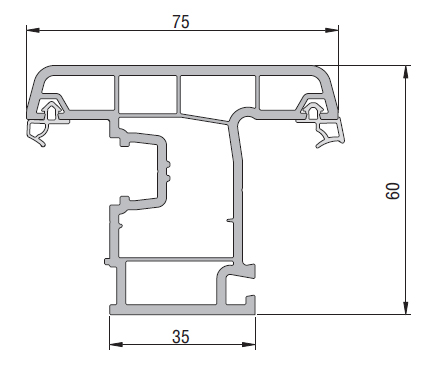
Casement Upvc Windows & doors profile cross section drawing
The most general series of Upvc profile that is used to make Casement Windows and doors in 60 series profile. Although this is the most commonly used series of upvc profile used to make upvc casement windows and doors, but apart from 60 series upvc profile 65 series, 70 series as well as many other series of uncommon series are also manufactured by different profile companies.
60 series Upvc casement frame profile used to make casement upvc windows and doors.60 series Upvc casement mullion profile used to make casement upvc windows and doors. 60 series Casement upvc window sash profile used in making casement upvc window60 series Casement upvc door sash profile used in making casement upvc doors60 series Upvc casement single glass bead profile used in casement upvc windows and door to fix single glass.60 series Upvc casement double glass bead profile used in making casement upvc windows and doors for fixing double glass unit (D.G.U.) glass
The above given dimensions of 60 series Upvc profiles may vary as per company to company.
Glass thickness starting from 3.5 mm (single glass) upto 32 mm (double or triple glazed glass) can be used in casement upvc windows and doors.
Types of glass that can be used in windows and doors
The basic hardwares used in making of a Upvc Casement Window is as follows:
Single point or multi-point lock
Rubber gaskets
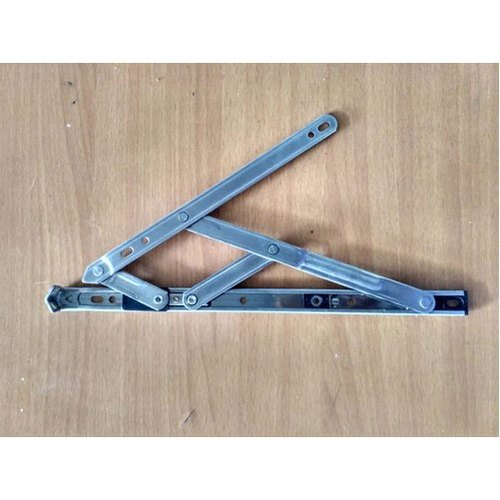
Friction Stay
The basic hardwares used in making of a Upvc Casement Door is as follows:
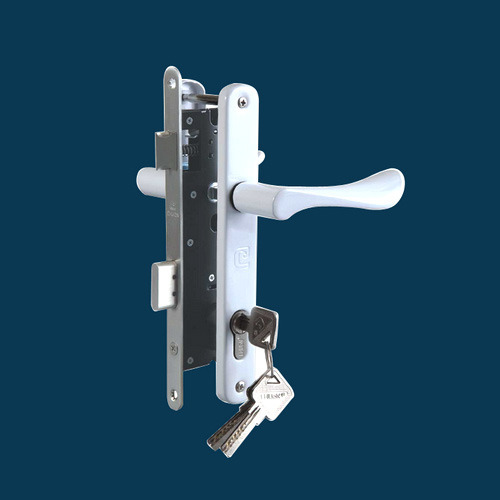
Mortise lock or Multi-point lock
3D or 2D Hinges
Rubber Gaskets
Rubber Gaskets:
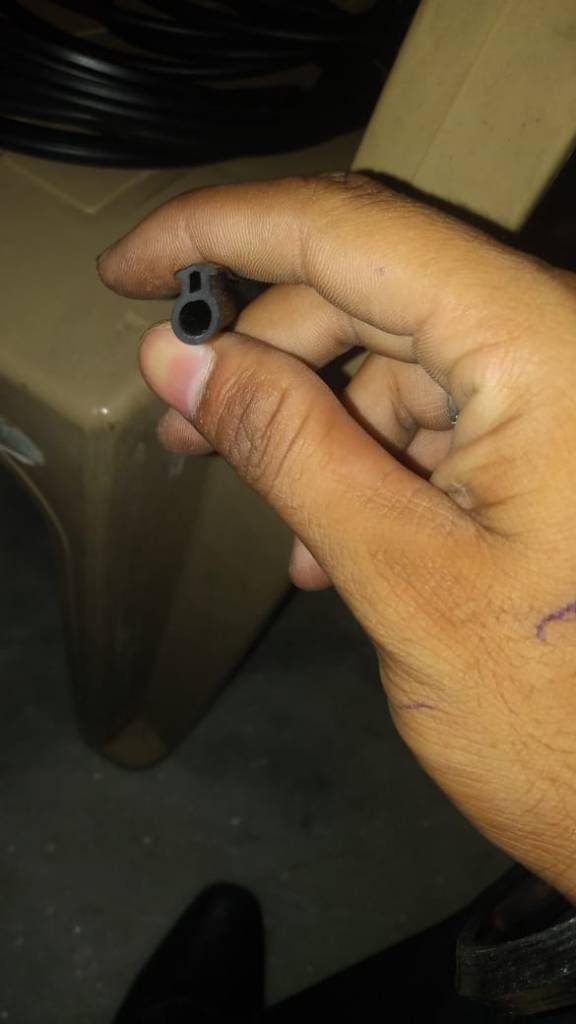
The rubber gaskets used in the Upvc Casement Windows and doors should be of EPDM quality. There are basically two types of rubber gaskets that are used in the making of a casement window or door.
K type: Used in the Upvc Glazing bead profile
O type: Used in Upvc Window & Door sash profile
The colour of the gasket used may vary as per availability or as per the fabricator’s choice. But the colour black is most commonly used.
Upvc O Type Rubber gasket used in Sash of Upvc Windows and doorsUpvc K type rubber gasket used in glass bead of Upvc Windows & Doors
Friction Stay:
The friction stay used should be of SS304 grade steel and preferably SS316 grade steel near sea side areas where corrosion is very high, to prevent them from rusting over time.
Upvc Window friction stayFriction stay of low-grade steel. This is what happens if you use friction stay of low-grade steel.
Single Point Locks:
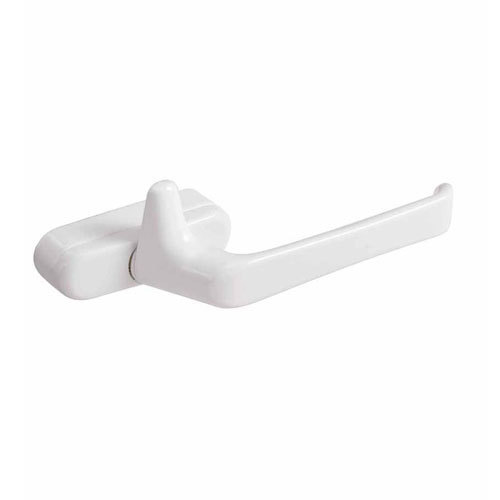
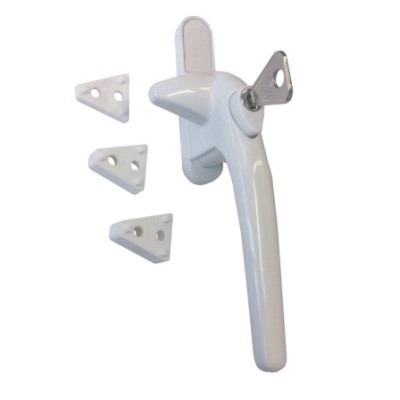
It is a type of lock which can lock your Upvc Windows or doors in only one single point. The types of single point locks used in Upvc Casement Windows are cockspur handle, T-Lock, etc.
The type of single point lock used in doors is Mortise lock
Upvc mortise casement door lock. It is a single point lock used in upvc casement doors.Upvc Window cockspur handle is a single point lock used in casement upvc windowsUpvc Window cockspur handle with lock and key. This is a single point lock used in upvc casement windows
Multi-point lock:
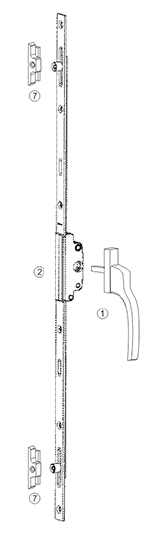
Multi-point locks are used in both Upvc casement windows and upvc casement doors. They are also known as espags. These are called multi-point locks as they get locks at more than one point, unlike single point locks.
Different combinations of handle can be used in espags for making Casement windows and doors.
Multipoint lock for Upvc Casement windows and doors.
3D and 2D Hinges:
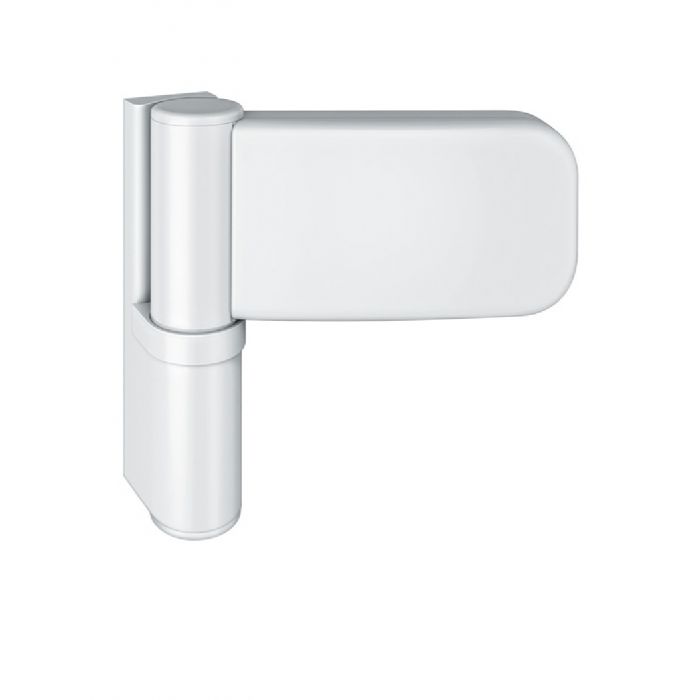
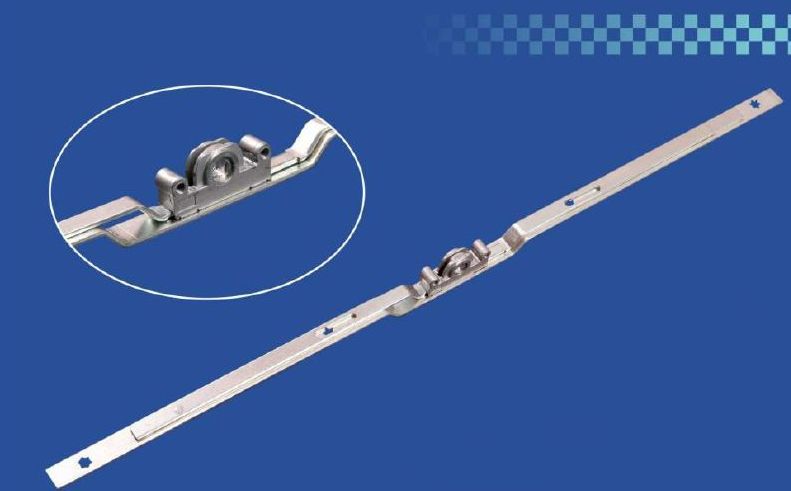
3D and 2D hinges are generally used in casement doors to mount the door sash on the casement door frame. It can also be used in upvc casement windows, but friction stay is a more preferred option for Upvc casement windows.
Upvc 3D hinges for casement doorsUpvc 2D hinges for casement doors
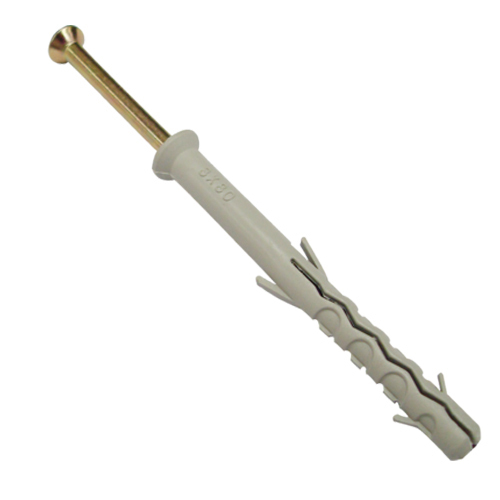
During installation, it is recommended to use nylon capped galvanized fasteners for the fixing of the frames of the Upvc Windows and Doors.
Nylon capped fasteners to fix Upvc Window & Door frames
Any gaps that remain around the wall and the Upvc Frame should be sealed using a Weather Silicone of Neutral Cure preferably matching the colour of the Upvc Window Frame or of white colour.
Upvc window should be sealed with a weather silicone around the gaps between the wall and the frame.
To learn more about Upvc Window & Door making process or to setup your very own Upvc Window workshop, contact us today.
In this blog we will learn about all the raw materials that are required to make Upvc Sliding Windows & Doors. These are also the most common type of Upvc Windows and doors that are sold in the market. They are the most economical type of Upvc Window or Door design you can make and that is the very reason most windows and doors sold are mostly sliding.
Before we start, if you plan to setup your own upvc window and door fabrication unit then you can contact us. We manufacture fully portable upvc window machines. We also provide you training and raw material suppliers contacts alongwith your purchase, so that starting a upvc window manufacturing unit becomes a easy task for you.
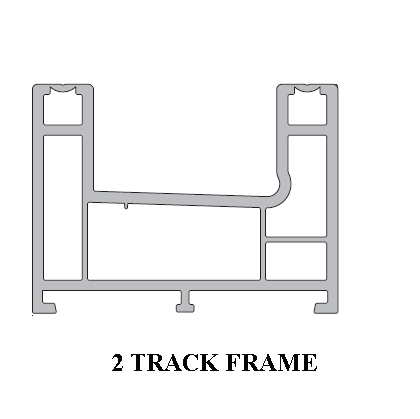
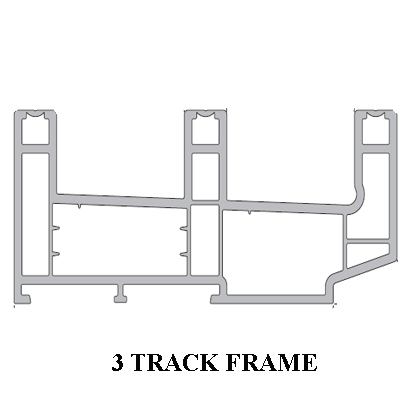
The frames of this kind of Upvc Windows and doors remain constant whereas the thickness of the sash changes depending on whether you are making a sliding window or door. In-case of a window sash, the width of the uPVC sash profile is less and in-case of a door sash the width of the uPVC sash profile is more.
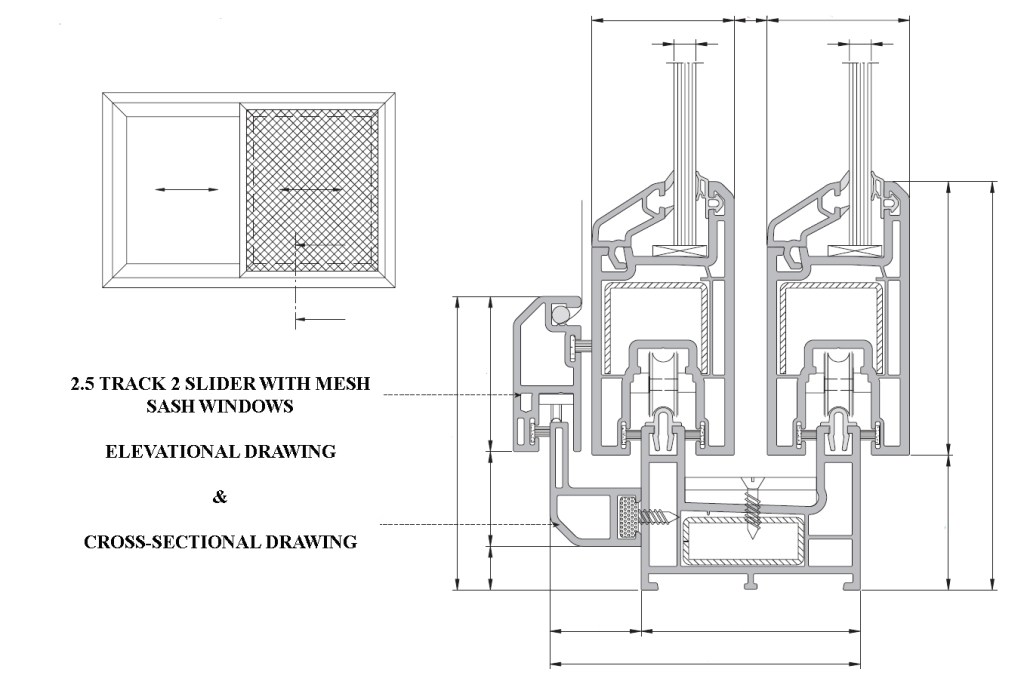
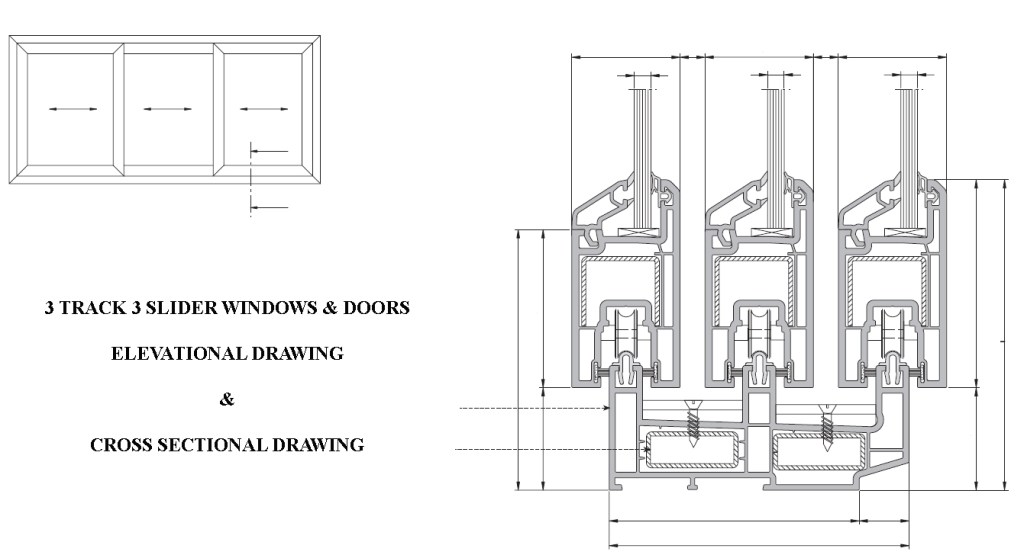
Upvc 2 Track Frame Profile remains same for making both Upvc Sliding Windows as well as DoorsUpvc 3 Track Frame Profile remains same for making both Upvc Sliding Windows as well as DoorsUpvc sliding door sash used for making Upvc sliding doors is bigger in width than sliding window sash profileUpvc sliding window sash used for making Upvc sliding windows is smaller in width than sliding door sash profile2 Track 2 Slider window and door drawings. Both elevation as well as cross-sectional drawing are given.2.5 Track sliding windows with mesh sash (mosquito net sash). The elevation, as well as sectional drawings, are given3 Track 3 Slider windows and doors drawing. Elevation drawing as well as cross-sectional drawing
The above-given profile designs may vary from company to company.
The most general series of profiles used to make sliding windows and doors are 60 series (for 2 Track Sliding Windows & Doors), 88 series (for 2.5 Track Sliding Windows and mesh sash) and 112 series (for 3 Track windows and doors).
Although these are commonly available series, apart from these other un-common series are also made by different Upvc Profile companies to make Upvc Windows and doors.
The window opening that a customer receives in a 2 Track or 2.5 Track sliding window or door is about 50%. Whereas, if they are using a 3 Track Window or door then the opening that they will get is upto 66%.
Customers can also be suggested to go for a 2 Track 4 Slider or a 3 Track 6 Slider window or door in case of a very wide opening aperture of the window or door area.
Glass thickness starting from 3 mm Single Glass upto 20 mm D. G. U. (Double Glazed Unit) thickness can be used in Upvc Sliding Windows & Doors.
Types of glass that can be used in windows and doors
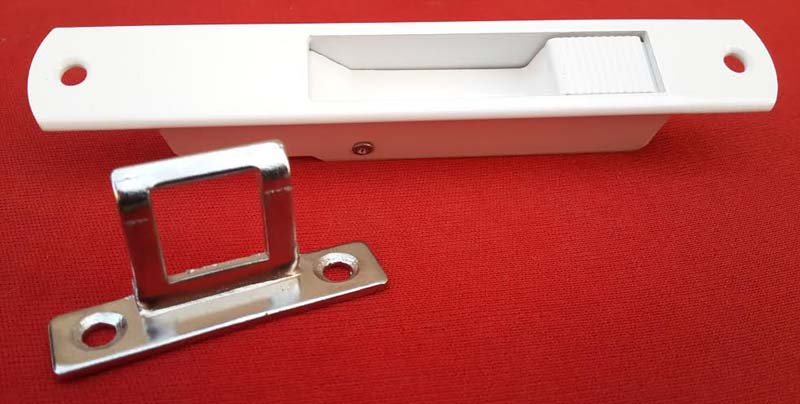
Customer does have the option of going for Single point lock (touchlock or crescent lock) for their windows whereas they can use both single point or multi-point lock (espag) for their doors. Multi-point locks cannot be used in window sashes unless the window sash is made from a sliding door sash profile.
All hardware and hardware fixtures should be fixed using stainless steel screws to prevent any rust in the future.
Crescent lock or moon lock is used in sliding upvc windows and doors as a single point lock Touchlock is used in upvc windows and doors as a single point lock.Upvc espag is used with a combination of a pop-up handle in Upvc sliding doors as a multipoint lockUpvc popup handle is used with a combination of an espag in Upvc sliding doors as a multipoint lock
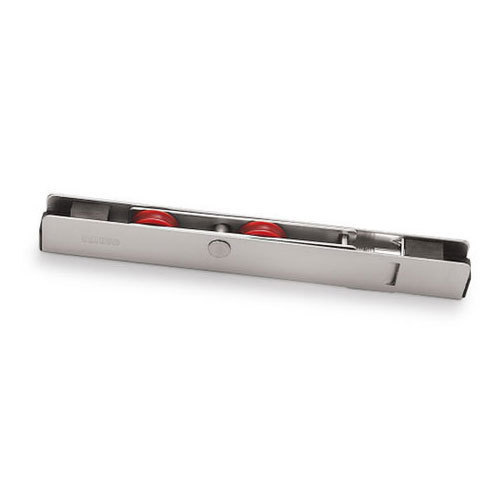
For rollers, fabricators can go for Single roller or Double adjustable rollers in case of an Upvc Sliding Window and a Double adjustable door roller incase of a Upvc Sliding Door.
Upvc Single Roller used in lightweight upvc sliding windowsUpvc Double Adjustable Rollers are used in Upvc Sliding Windows with heavy sash weight.Upvc Adjustable Sliding Door Roller is used in Upvc Sliding Doors
The rubber gaskets used in the Upvc Sliding Windows and doors should be of EPDM quality. There is basically three types of rubber gaskets that are used in the making of a sliding window or door.
K type: Used in the Upvc Glazing bead profile
O type: Used in Upvc Window & Door sash profile
Round type: Used to fix the mosquito net in the mesh profile
The colour of the gasket used may vary as per availability or as per the fabricator’s choice. But the colour black is most commonly used.
Upvc K type rubber gasket used in a glass bead of Upvc Sliding Windows & DoorsUpvc O Type Rubber gasket used in Sliding Sash of Upvc Windows and doorsUpvc Round Rubber Gasket used to fix the mosquito net in the mesh sash of Sliding Windows & Doors
If the Sliding window or door sash is too heavy then it is mandatory to use Aluminium Track on the bottom profile of the sliding frame.
Upvc Aluminium Track is used on the bottom of the Sliding Window or door frame profile
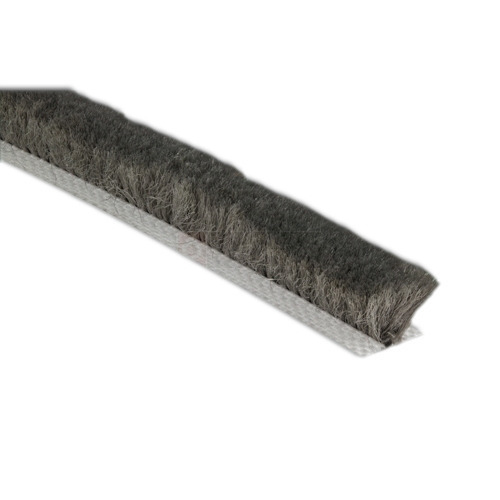
Woolpile is also used around the sliding sash to prevent it from being loose during the running of the sliding sash along with the frame profile. Again the colour of the woolpile used may vary. But the colour grey and black are the two most common colours available in the market.
The woolpile used should be preferable of silicated quality (silicone tipped) to prevent soaking of water during the rainy season.
Upvc silicated Woolpile is used as a brush gap sealer between the sash and the frame of the Upvc Sliding Window or Door
During installation, it is recommended to use nylon capped galvanized fasteners for the fixing of the frames of the Upvc Windows and Doors.
Nylon capped galvanised Fasteners should be used to fix uPVC Window and door frames.
Any gaps that remain around the wall and the Upvc Frame should be sealed using a Weather Silicone of Neutral Cure preferably matching the colour of the Upvc Window Frame or of white colour.
Upvc window should be sealed with weather silicone around the gaps between the wall and the frame.
To learn more about Upvc Window & Door making process or to setup your very own Upvc Window workshop, contact us today.















 SAICON